

A missed pill in the morning, a refill that ran out sooner than expected, two bottles with similar labels – managing several prescriptions at once can become confusing faster than most people expect. If you have been wondering how to manage multiple medications safely, the goal is not perfection. It is building a simple, reliable system that helps you take the right medicine, at the right time, for the right reason.
For many adults, especially those managing blood pressure, diabetes, thyroid disease, or other long-term health concerns, taking more than one medication is part of staying well. The challenge is that every added prescription, supplement, or over-the-counter product increases the chance of missed doses, duplicate therapy, side effects, or interactions. Good medication management is less about memorizing every detail and more about staying organized and keeping your care team informed.
Why medication safety gets complicated
Most medication problems do not happen because someone is careless. They happen because real life is busy. Routines change, labels are hard to read, and one specialist may not know what another prescribed. Even vitamins, herbal products, and occasional cold medicine can affect how your regular prescriptions work.
Medication safety can also shift over time. A plan that worked well six months ago may stop fitting your needs after a new diagnosis, a hospital visit, a dose change, or a new side effect. That is why medication review should be ongoing, not something you only think about when a problem comes up.
How to manage multiple medications safely at home
The safest approach starts with one complete and current medication list. Write down every prescription, over-the-counter medication, vitamin, supplement, and as-needed product you use. Include the name, dose, how often you take it, and why you take it. If you are not sure why you are taking something, that is worth asking about at your next appointment.
Keep this list in one place that is easy to access. Many patients do well with a note on their phone, a printed list in a wallet, or a medication sheet on the refrigerator. The format matters less than whether it stays updated. Bring it to every clinic visit, urgent care visit, specialist appointment, and pharmacy consultation.
A daily routine matters just as much as the list itself. Tie medications to regular activities, such as breakfast or brushing your teeth, when appropriate. This makes doses easier to remember than relying on memory alone. Still, not every medication should be taken with food or at the same time of day, so the routine needs to match the instructions for each prescription.
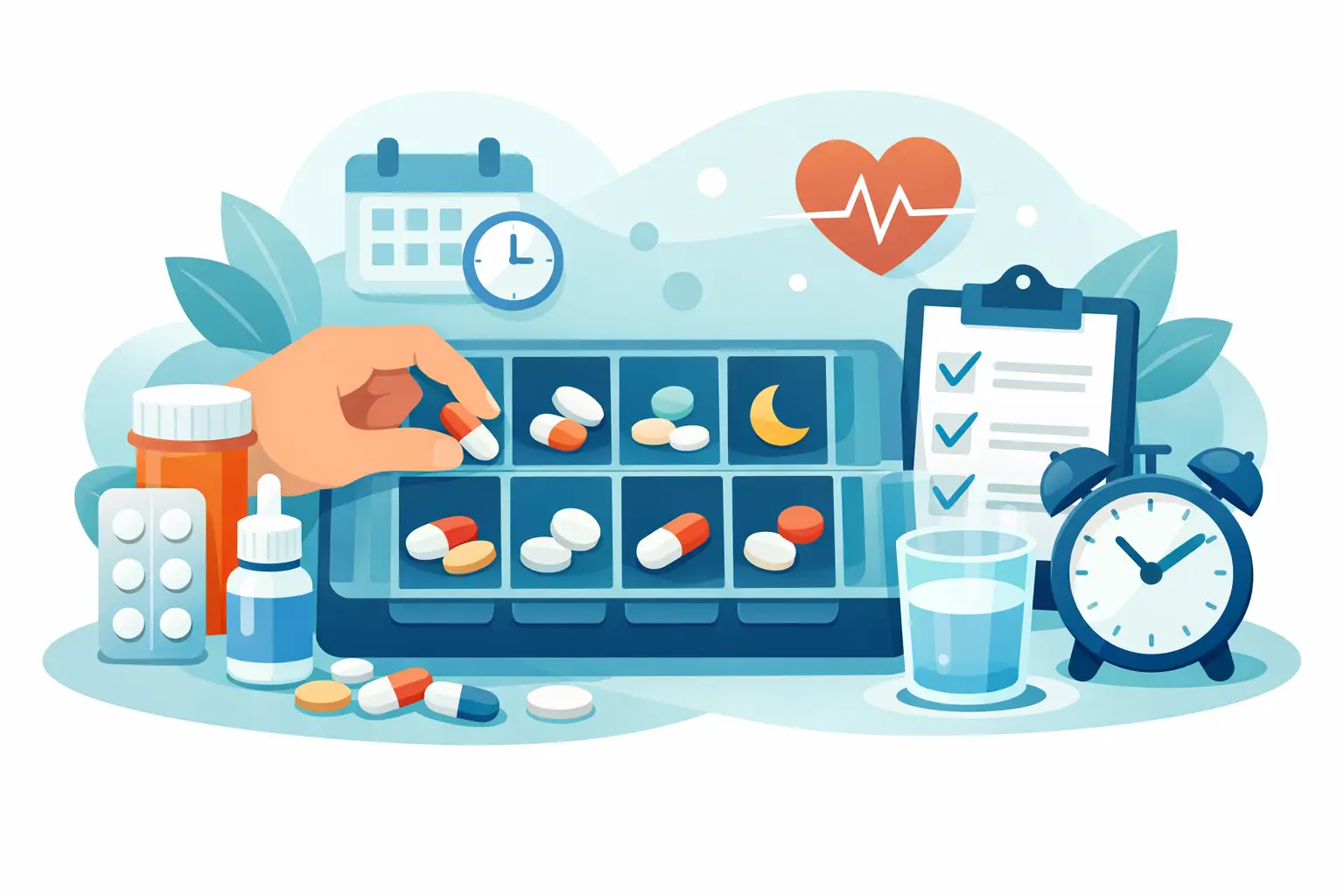
Pill organizers can be helpful, especially weekly boxes with morning and evening compartments. They reduce guesswork and make it easier to see whether you missed a dose. But they are not the right fit for every medication. Some drugs need to stay in their original packaging because of moisture, light sensitivity, or specific storage directions. If you are unsure, ask your pharmacist before moving pills into a container.
The role of one main medication record
When different doctors are involved, details can get scattered. One office may know your blood pressure medicine, another may manage thyroid treatment, and a third may recommend a supplement. None of those decisions happen in isolation.
That is why having one primary care home can make such a difference. A primary care provider can look at the full picture, compare medications, and help catch overlap or interactions that are easy to miss when care is fragmented. This is especially valuable for adults managing several chronic conditions at the same time.
If a medication changes, update your list right away rather than waiting. Small delays create confusion. Patients often remember that a medicine changed, but not whether the old one was stopped completely or just adjusted. Writing it down right away prevents mix-ups later.
Watch for these common medication risks
Some medication problems are subtle at first. A side effect may look like fatigue, dizziness, stomach upset, poor sleep, swelling, or mental fog. Patients sometimes assume these changes are due to age, stress, or their condition itself, when the medication plan may be part of the issue.
The biggest risks often include taking duplicate medications, mixing prescriptions with supplements without review, using the wrong dosing tool for liquid medicine, or restarting an old medication without checking whether it still fits your current treatment plan. Confusion is also common when instructions say things like take twice daily, every 12 hours, or as needed. Those phrases are not always interchangeable.
It also helps to pay attention after any change. A new medication, dose increase, or substitute from a different manufacturer can affect how you feel. That does not always mean something is wrong, but it does mean the change deserves attention.
How to reduce missed doses and refill gaps
Many medication issues start before the pill is even taken. Refill delays, insurance problems, cost concerns, and pharmacy shortages can interrupt treatment. If you are spacing out doses to make a prescription last longer, tell your provider. Patients often hesitate to bring this up, but it is a practical healthcare issue, not a personal failure.
Set refill reminders several days before you run out. Automatic pharmacy alerts can help, but they are not perfect. Travel, holiday schedules, and weekends can all create delays. A little lead time lowers the chance of missed doses.
If your schedule changes often, a medication routine needs to be realistic. Someone working variable hours may do better with phone alarms than with meal-based timing. Someone caring for a family member may need a visible written chart rather than relying on memory. The best system is the one you will actually use consistently.
When supplements and over-the-counter products matter
Patients are often surprised by how often nonprescription products affect medication safety. Pain relievers, allergy medicine, heartburn products, sleep aids, and herbal supplements can all interact with prescriptions or worsen certain health conditions.
This does not mean all supplements are unsafe. It means they should be reviewed in context. A product that is reasonable for one person may not be a good fit for someone with kidney disease, high blood pressure, or diabetes. The same applies to short-term products you only use occasionally. Even if you take something rarely, your provider still needs to know about it.
What to do if side effects show up
If you think a medication is causing a problem, do not stop it on your own unless you have been told it is safe to do so. Some medications can cause withdrawal effects, rebound symptoms, or worsening of the underlying condition if they are stopped suddenly.
Instead, note what you are experiencing, when it started, and whether anything changed recently. That information helps your provider decide whether the issue is likely medication-related and what to do next. Sometimes the answer is changing the dose. Sometimes it is changing the timing. Sometimes it is switching to a different medication entirely. And sometimes the symptoms come from something else, which is why evaluation matters.
Seek urgent care right away for symptoms such as trouble breathing, facial swelling, severe rash, fainting, chest pain, or signs of severe low blood sugar. Those situations should not wait for a routine follow-up.
How to manage multiple medications safely with your care team
The most effective medication plan is one you understand. At appointments, ask plain questions: What is this medication for, when should I take it, what should I avoid with it, and what side effects should I watch for? If a plan feels confusing in the office, it will usually feel more confusing at home.
It is also reasonable to ask whether every medication is still necessary. In some cases, the answer is yes. In other cases, a medicine that made sense in the past may no longer be needed, or there may be a simpler option. Medication review is not about taking fewer medicines at all costs. It is about making sure each one has a clear purpose and still fits your current health needs.
If you help a parent, spouse, or family member manage medications, bring that up too. Caregivers often notice patterns patients miss, such as skipped evening doses or repeated confusion about instructions. A shared plan can improve safety for everyone involved.
At a clinic like Ekom Medical, this kind of review is part of personalized primary care. When providers know your medical history, current conditions, and daily routine, they can help make medication plans more practical, not just more medically correct.
A safer system is usually a simpler one
People often assume medication safety depends on being extra careful every single moment. In reality, it usually depends on reducing the number of decisions you have to make each day. One updated list, one dependable routine, and one care team that sees the bigger picture can prevent many common problems before they start.
If your medication plan feels harder to manage than it used to, that is a good reason to bring it up. You do not need to wait for a mistake to ask for help. A clear conversation now can make your treatment safer, easier, and more sustainable over time.

Comments are closed