

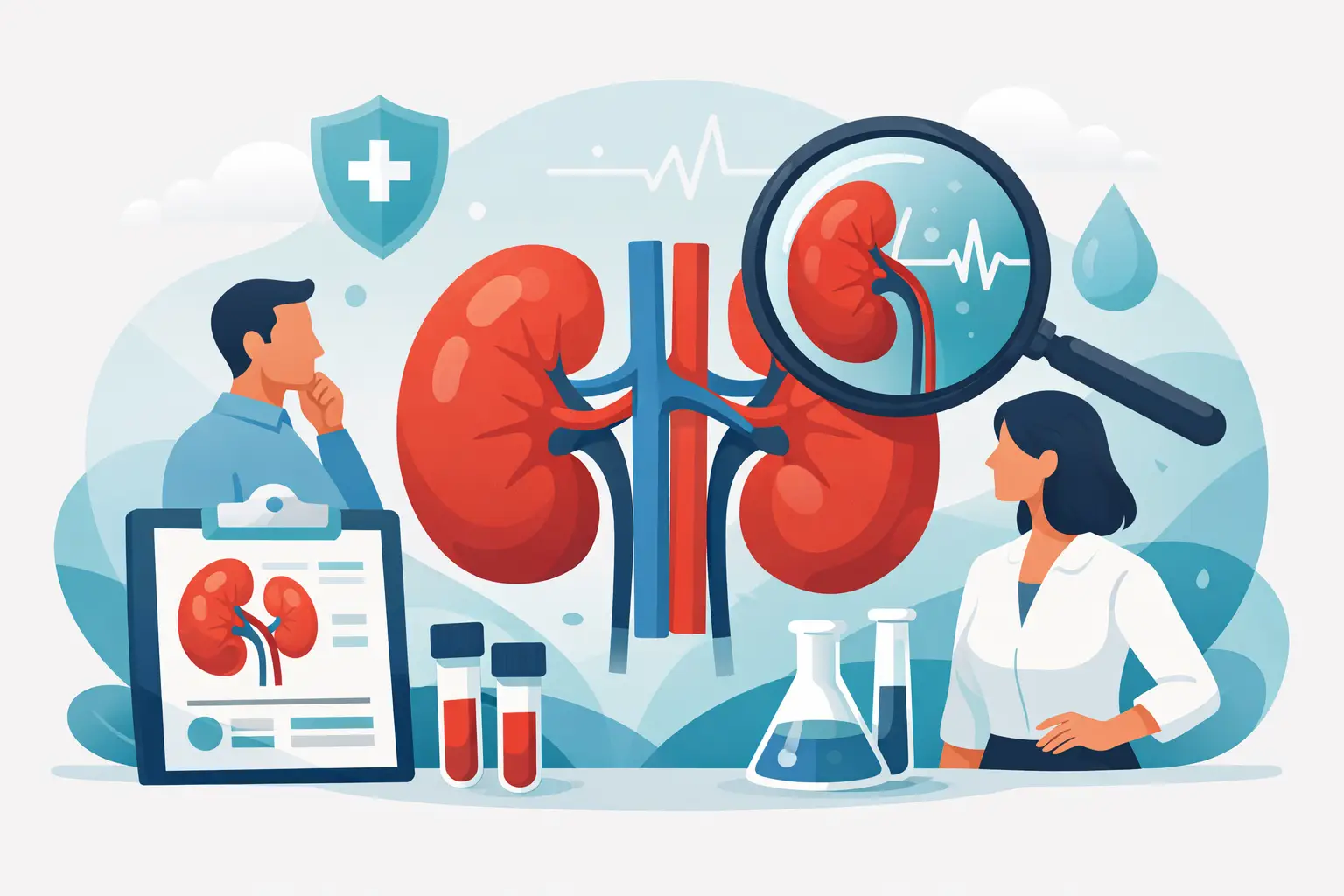
Kidney disease often develops quietly. A person may feel well, keep up with work and family responsibilities, and have no obvious urinary symptoms while kidney function is gradually changing. That is why the question, when should adults check kidney function, matters most before there is a problem that is hard to reverse.
Kidneys filter waste and extra fluid from the blood, help regulate blood pressure, support healthy red blood cell production, and keep key minerals in balance. Simple blood and urine testing can identify early signs of strain, giving you and your primary care provider time to address the cause and protect long-term health.
When Should Adults Check Kidney Function?
There is no single testing schedule that fits every adult. Your age, medical history, medications, family history, and prior test results all help determine what makes sense for you.
For many healthy adults with no known risk factors, kidney-related testing is often included as part of a routine preventive exam or baseline blood work. This creates a helpful reference point for the future. If a later result changes, your provider can compare it with your usual level rather than interpreting one number in isolation.
Adults with risk factors generally need testing more often, commonly once a year and sometimes more frequently. The goal is not to cause alarm. It is to find changes early, when blood pressure control, blood sugar management, medication adjustments, hydration guidance, and other personalized steps may make a meaningful difference.
Diabetes and high blood pressure call for regular monitoring
Diabetes and high blood pressure are two of the leading causes of chronic kidney disease. Elevated blood sugar can damage the kidneys’ small filtering vessels over time, while uncontrolled blood pressure places added stress on those same delicate structures.
If you have diabetes, regular kidney testing is a standard part of ongoing care, even when your blood sugar seems well managed. If you have high blood pressure, kidney testing also helps your provider see both whether your kidneys may be affected and whether your treatment plan is supporting them appropriately.
The right interval depends on your results and overall health. Someone with stable results may need annual testing, while someone with a changing result, difficult-to-control blood pressure, or several health conditions may benefit from closer follow-up.
Other reasons to test sooner
Kidney function deserves attention if you have heart disease, a history of stroke, obesity, or a family history of kidney failure. These factors do not guarantee kidney disease, but they can raise risk and make routine monitoring more valuable.
Testing may also be appropriate if you have had kidney stones, repeated urinary infections, an autoimmune condition, or a past episode of acute kidney injury. Adults over 60 may benefit from discussing kidney health during regular visits because kidney filtration can naturally change with age. A lower estimated filtration rate is not always a sign of disease in an older adult, but it should be interpreted thoughtfully in context.
Certain medications can also affect the kidneys or require dose adjustments when kidney function changes. This includes some anti-inflammatory pain relievers, water pills, blood pressure medicines, diabetes medications, and certain antibiotics. Do not stop prescribed medication on your own. Instead, ask your provider whether your medication list and kidney tests should be reviewed.
Symptoms That Should Prompt a Conversation
Early chronic kidney disease frequently causes no symptoms. That is exactly why risk-based screening is so useful. Still, new or persistent symptoms should not be ignored, especially if you already have diabetes, high blood pressure, or a kidney history.
Schedule a medical evaluation if you notice swelling in your feet, ankles, hands, or around the eyes; foamy urine; blood-colored or unusually dark urine; a significant change in how often you urinate; or ongoing nausea and poor appetite. Increasing fatigue, shortness of breath, muscle cramps, or itching can also occur with many different health concerns, including kidney problems.
These symptoms do not automatically mean kidney disease. Swelling, for example, can be related to circulation, heart health, medications, or other causes. The value of a primary care evaluation is that your provider can look at the full picture rather than relying on one symptom alone.
Seek prompt medical care for severe flank pain, visible blood in the urine, very little urine output, sudden swelling, or symptoms that come on quickly and feel serious. Acute changes in kidney function need timely assessment.
What Kidney Function Tests Usually Include
Checking kidney health usually does not require a complicated process. In many cases, it begins with a blood draw and a urine sample.
A comprehensive metabolic panel or similar blood test measures creatinine, a waste product filtered by the kidneys. Your provider uses creatinine along with factors such as age and sex to calculate an estimated glomerular filtration rate, often called eGFR. This estimate helps show how effectively the kidneys are filtering blood.
A urine test is equally valuable. A urinalysis can identify blood, protein, glucose, or signs of infection. A urine albumin-to-creatinine ratio, sometimes called UACR, looks for small amounts of albumin protein in the urine. Protein can appear in the urine before there is a major change in eGFR, particularly in people with diabetes or high blood pressure.
One abnormal result does not always mean you have chronic kidney disease. Dehydration, a recent illness, strenuous exercise, some medications, and even the timing of a sample can affect results. Chronic kidney disease is generally considered when an abnormality persists for at least three months. Your provider may repeat testing, review trends, check blood pressure, and consider other tests before making a diagnosis.
How to Prepare for Kidney Testing
Most kidney blood and urine tests require little preparation. Staying normally hydrated is usually helpful, unless your clinician has given different instructions. Avoid trying to dramatically increase water intake just before testing, since overhydration can also affect how some results are interpreted.
Bring an updated list of prescription medicines, over-the-counter products, vitamins, and supplements to your appointment. Nutritional and wellness products can be helpful for some people, but they should still be reviewed as part of your complete care plan. This is particularly true if you have known kidney disease or take several medications.
If fasting blood work is being ordered to check cholesterol or blood sugar as well, your care team will tell you whether to avoid food beforehand. Ask whether you should take your usual morning medications. Clear instructions prevent confusion and help make your visit easier.
What Happens If Results Are Outside the Expected Range?
An unexpected result is a reason for a conversation, not a reason to assume the worst. Your provider will consider the degree of change, whether it is new, your blood pressure and blood sugar history, your hydration status, and the medicines you take.
Sometimes the next step is simply repeating the test. In other situations, care may include better blood pressure control, diabetes management, changes to medication dosing, nutrition guidance, imaging, or referral to a kidney specialist. The plan should be individualized. A mild, stable result may be monitored over time, while a rapid change needs faster action.
Kidney health is closely connected to the rest of your health. Managing blood pressure, keeping diabetes under control, avoiding tobacco, staying physically active as you are able, and using medications wisely can support both kidney and cardiovascular health. There is no one supplement or quick fix that replaces regular medical monitoring.
For adults in Glendale and nearby communities, a consistent primary care relationship makes these decisions less stressful. At Ekom Medical, kidney-related testing can be considered alongside your preventive care, medication review, blood pressure, blood sugar, and personal health goals. The most helpful next step is often a routine visit where you can ask questions, establish a baseline, and make a plan that fits your life.

Comments are closed