

A sore throat starts on Tuesday. By Wednesday, you are wondering whether to wait for an appointment, head to urgent care, or hope it passes on its own. That is where the question of primary care vs urgent care becomes very real. Choosing the right setting can save time, lower stress, and help you get the kind of care that fits the problem in front of you.
The challenge is that both options can treat common health concerns, but they are built for different purposes. One is designed around long-term health, prevention, and continuity. The other is meant for issues that need prompt attention when your regular doctor is not available or when waiting a few days does not feel reasonable.
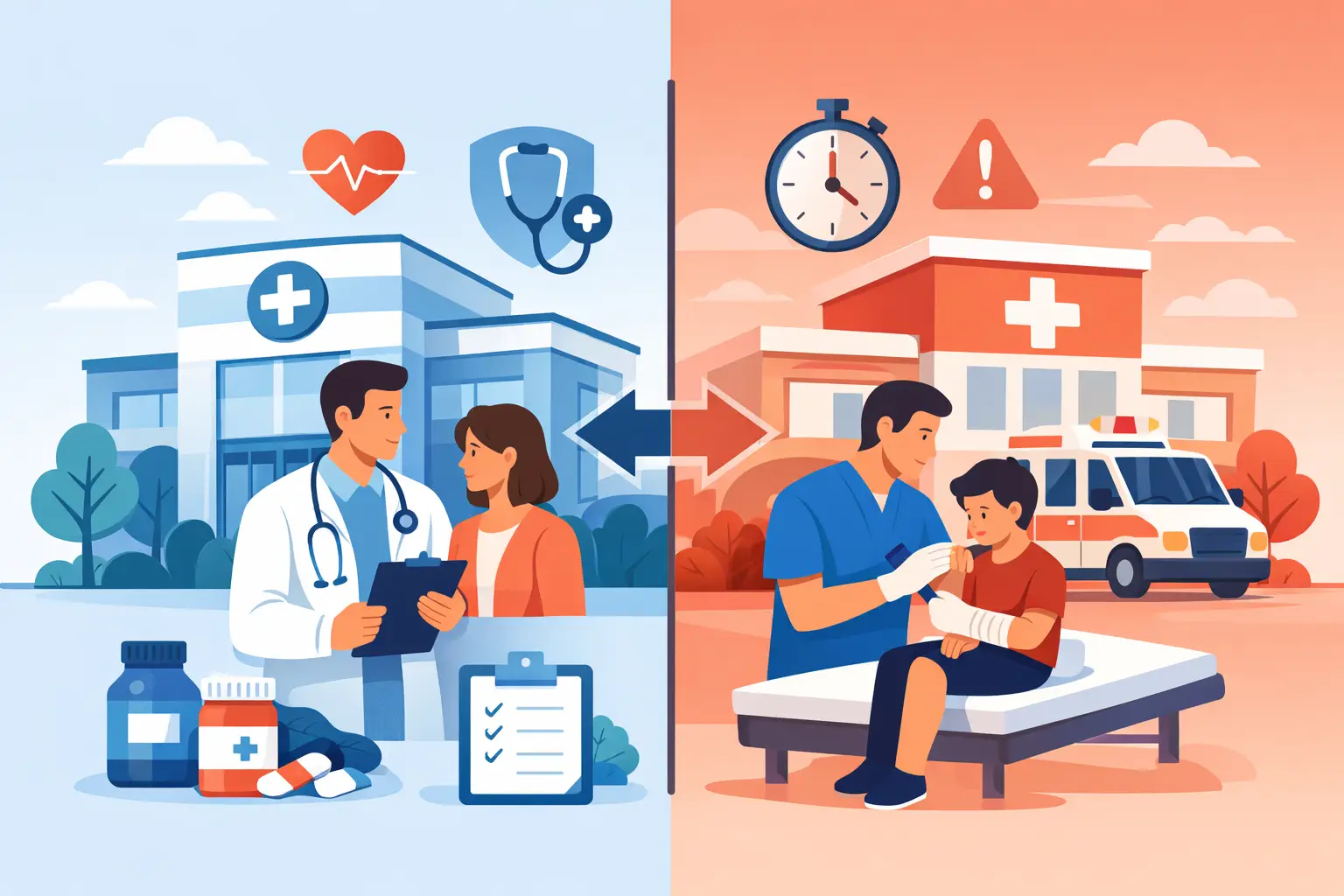
Primary care vs urgent care: the basic difference
Primary care is your medical home base. It is where you go for annual exams, blood pressure checks, diabetes management, medication reviews, preventive screenings, and new symptoms that need a thoughtful workup. A primary care provider gets to know your health history, your medications, your risk factors, and often the patterns behind recurring symptoms.
Urgent care is built for problems that need same-day attention but are not true emergencies. Think minor infections, cold and flu symptoms, uncomplicated urinary symptoms, a small cut that may need evaluation, or a sprain that should be checked. The goal is timely treatment for a problem that cannot wait for the next routine appointment.
That difference matters more than many people realize. If you have a condition that may be connected to your broader health picture, primary care often offers more complete care. If you need fast help for a sudden but non-life-threatening issue, urgent care may be the better fit.
When primary care is usually the right choice
Primary care is often the best option when the issue is not just about today, but also about what comes next. If you need preventive care, long-term monitoring, medication management, or a careful review of symptoms, this is where primary care stands apart.
For example, if your blood pressure has been running high for weeks, urgent care can document it, but primary care is where a long-term treatment plan usually happens. The same is true for ongoing concerns like diabetes, thyroid disorders, kidney disease, weight management, fatigue that keeps returning, or symptoms that do not have an obvious explanation. These situations often require follow-up, testing over time, and a provider who can connect the dots.
Primary care also makes sense for annual wellness visits, physicals, preventive screenings, vaccinations, and routine lab review. Those appointments may not feel urgent, but they are often what helps people avoid bigger health problems later.
There is another benefit that patients value once they experience it – continuity. When you see the same clinic over time, your care becomes more personalized. Your provider knows what has already been tried, what has worked, what has not, and how your medical history shapes current decisions.
When urgent care may be the better option
Urgent care is helpful when something needs prompt attention and your regular primary care office cannot see you quickly enough. It fills the space between routine care and the emergency room.
Common examples include fever, sore throat, ear pain, cough, mild asthma flare, sinus symptoms, nausea, vomiting, diarrhea, painful urination, minor burns, simple sprains, or a rash that appeared suddenly. These are problems that deserve medical attention, but not necessarily the level of care an emergency department provides.
Urgent care can also be practical outside standard office hours. If symptoms start in the evening or over the weekend, waiting may feel difficult, especially when discomfort is increasing or you need quick reassurance.
That said, urgent care is usually focused on the issue of the moment. It may not be the best setting for managing multiple chronic conditions, adjusting long-term medications, or evaluating a symptom that has been developing slowly over months.
The gray area: when it depends
Some health concerns can reasonably go either way. That is where people often feel stuck.
Take a cough, for example. If it started yesterday and you want to be checked for an acute infection, urgent care may be appropriate. But if the cough has lingered for six weeks, keeps returning, or is tied to medication side effects, allergies, reflux, or another underlying issue, primary care is often the better place to start.
The same goes for headaches, fatigue, dizziness, abdominal discomfort, or joint pain. If symptoms are sudden and bothersome, urgent care can help rule out an immediate problem. If symptoms are recurring, vague, or part of a bigger pattern, primary care is usually better equipped to evaluate the whole picture.
This is where having an established primary care provider becomes valuable. Even when urgent care is necessary in the moment, follow-up with primary care helps make sure the problem fully resolves and that nothing important is missed.
What primary care offers that urgent care usually cannot
Urgent care can be extremely useful, but it is not designed to replace a relationship-based medical practice. Primary care offers something different: context.
Context means your provider understands your baseline health. They know whether your blood pressure trend is new or longstanding. They know which medications you have already tried, whether your lab values have been stable, and whether a new symptom may be related to an existing condition. That perspective can lead to more individualized care and fewer gaps between visits.
Primary care also supports preventive medicine in a way urgent care generally does not. Screenings, health risk counseling, chronic disease monitoring, medication reconciliation, and long-term care planning all happen best in a setting built for follow-through.
For adults managing more than one health issue, that coordinated approach matters. It can reduce duplicated testing, help catch subtle changes earlier, and make care feel less fragmented.
When neither primary care nor urgent care is enough
There are times when the right answer is not primary care or urgent care, but emergency care. Chest pain, severe shortness of breath, sudden weakness on one side, confusion, major injuries, heavy bleeding, or signs of a possible stroke or heart attack need immediate emergency evaluation.
Many patients hesitate because they do not want to overreact. That instinct is understandable. But when symptoms are severe, rapidly worsening, or potentially life-threatening, emergency care is the safer choice.
How to decide in the moment
If you are unsure where to go, ask yourself a few practical questions. Is this about ongoing health management or a sudden problem? Do I need same-day care, or can this wait for an appointment? Is the issue simple and straightforward, or does it need follow-up and a broader plan? Are symptoms severe enough that emergency care might be necessary?
In many cases, the decision becomes clearer when you think about the purpose of the visit. If you need fast treatment for a single, non-emergency issue, urgent care may be right. If you need continuity, prevention, chronic disease support, or a more complete evaluation, primary care is usually the better fit.
For patients in Glendale and nearby communities, this is one reason establishing care with a trusted primary care clinic can make everyday health decisions easier. When questions come up, you are not starting from scratch.
Primary care vs urgent care and the cost of fragmented care
One part of the conversation that often gets overlooked is what happens after the visit. A one-time urgent care visit may solve the immediate problem, but if there is no follow-up, recurring symptoms or underlying issues can continue in the background.
That does not mean urgent care is the wrong choice. It means urgent care works best when used for what it is intended to do. If the issue needs more than immediate treatment, follow-up matters.
Primary care helps reduce fragmented care by giving patients one place to return for lab review, medication updates, preventive visits, and ongoing management. At a clinic like Ekom Medical, that can also include services such as telehealth access, diagnostic testing, and individualized treatment planning that supports patients over time rather than for just one episode.
A practical way to think about it
Primary care is where your health story is known. Urgent care is where an urgent chapter can be handled quickly. Both have value, and neither is better in every situation.
The key is matching the type of care to the type of problem. When you do, care tends to feel less stressful, more efficient, and more personal. And when you already have a primary care home, even unexpected health issues become a little easier to navigate.

Comments are closed