

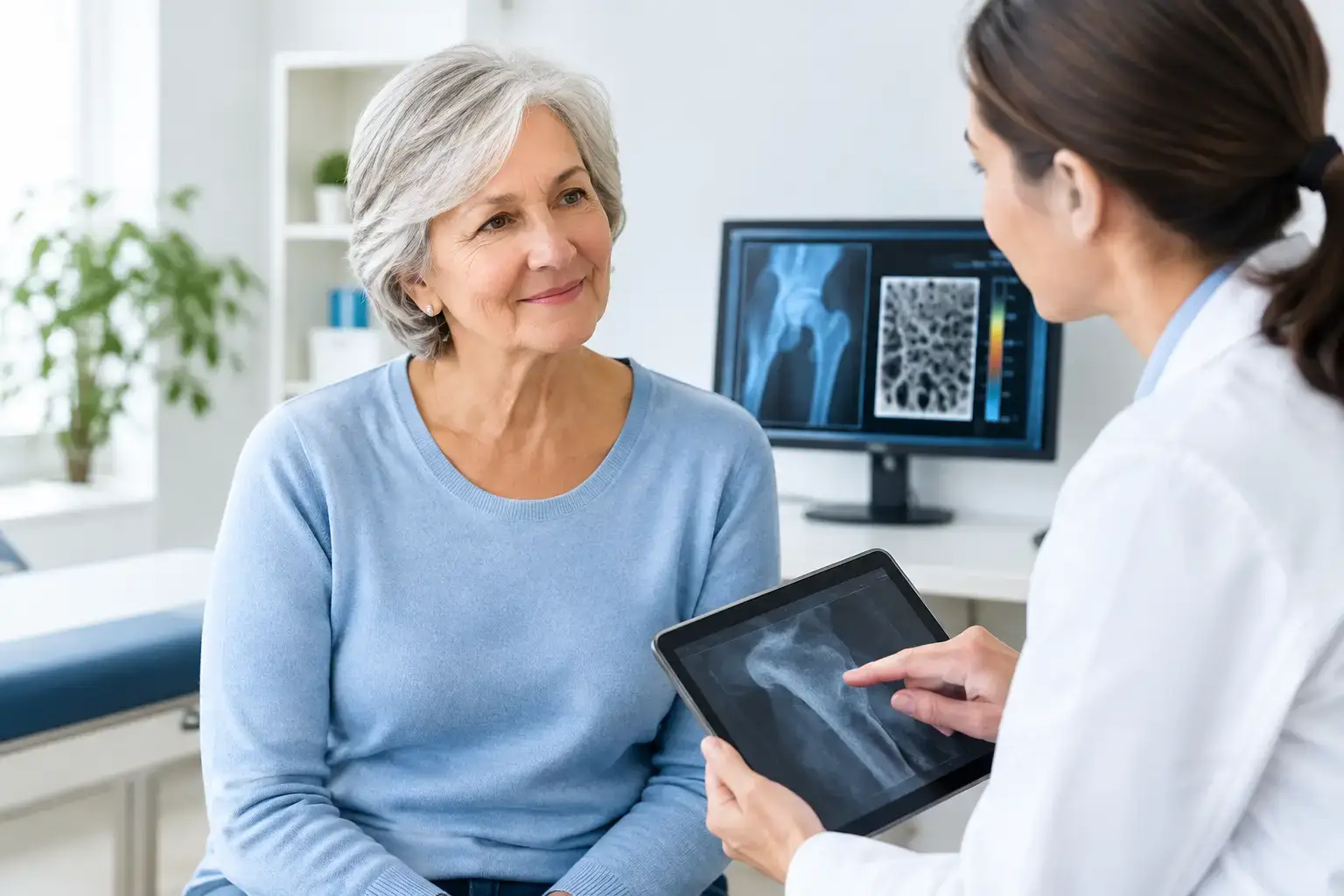
A broken bone after a simple fall can be life-changing, especially when it reveals bone loss that had no obvious symptoms. This osteoporosis screening guide explains when a bone density test may be appropriate, what the results can tell you, and how primary care can help you make a plan that fits your health, medications, and daily life.
Osteoporosis is often called a silent condition because bones can gradually become weaker without causing pain. Many people do not learn they have it until they experience a fracture of the hip, spine, or wrist. Screening is a practical way to identify risk before that happens.
Who should consider osteoporosis screening?
For most women, routine screening begins at age 65. Adults who have gone through menopause may need screening earlier when they have risk factors that make bone loss more likely. Common examples include a previous fracture from a minor fall, a parent who had a hip fracture, low body weight, smoking, frequent alcohol use, rheumatoid arthritis, or medical conditions that affect nutrient absorption or hormone levels.
Men can develop osteoporosis too, although it is sometimes recognized later. Many clinical recommendations support screening men beginning at age 70, while earlier testing may be appropriate for men with significant risk factors. The best timing depends on the whole picture, including age, family history, past fractures, medical conditions, and medications.
Certain prescriptions deserve special attention. Long-term use of corticosteroids, such as prednisone, can weaken bones. Some treatments for prostate cancer or breast cancer, certain seizure medicines, and medications that reduce stomach acid may also affect bone health in some patients. Do not stop a medication because of bone concerns. Instead, bring your medication list to your appointment so your provider can weigh its benefits and risks.
A screening conversation may also be warranted at any age after a fracture caused by a fall from standing height or less. A fall like that may not seem serious, but it can be an important signal that bone strength needs evaluation.
What happens during a bone density test?
The most common screening test is a dual-energy X-ray absorptiometry scan, usually called a DXA or DEXA scan. It is a quick, painless test that measures bone mineral density, most often at the hip and lower spine. You lie still on a padded table while the scanner passes over the area being measured. The radiation exposure is very low.
The appointment itself is generally straightforward. You may be asked to avoid calcium supplements for about 24 hours beforehand, depending on the imaging center’s instructions. Tell the staff if you recently had a test involving contrast material or a nuclear medicine study, since timing can occasionally matter. Comfortable clothing without metal around the waist and hips can make the visit easier.
A DXA scan measures density, but it is only one part of the evaluation. Your primary care provider may also discuss your history of falls, nutrition, activity level, tobacco and alcohol use, menopause timing, family history, and medications. Blood work may be considered when there is concern for a contributing condition, such as a thyroid disorder, vitamin D deficiency, kidney disease, or an issue affecting calcium balance.
Understanding T-scores and fracture risk
DXA results are often reported as a T-score. For postmenopausal women and men age 50 and older, a T-score of -1.0 or higher is generally considered normal bone density. A score between -1.0 and -2.5 is called osteopenia, meaning bone density is lower than expected but does not meet the definition of osteoporosis. A score of -2.5 or lower meets the bone-density definition of osteoporosis.
Those labels are useful, but they do not tell the entire story. Two people with the same T-score can have different fracture risks based on their age, prior fractures, medications, smoking status, and other health factors. Providers may use a fracture-risk calculator to estimate the chance of a major fracture over the next 10 years. This helps guide whether monitoring and lifestyle support are reasonable or whether medication should be part of the conversation.
A diagnosis of osteopenia does not automatically mean medication is necessary. Likewise, a fracture related to fragile bones can warrant treatment discussion even if a scan does not show a T-score below -2.5. Personalized care matters because the right next step depends on more than one number.
How often should you be tested?
There is no single interval that fits everyone. If your first bone density test is normal and your risk is low, repeat testing may not be needed for several years. If you have osteopenia, take a medication that affects bone health, have a new fracture, or are receiving treatment for osteoporosis, your provider may recommend repeat testing sooner.
Testing too often may not provide useful new information, because bone density changes gradually. On the other hand, waiting too long can miss a meaningful change in someone whose risk is increasing. Your screening schedule should reflect your individual results and health history rather than a calendar reminder alone.
Everyday choices that support stronger bones
Screening is not only about identifying a problem. It also opens the door to practical prevention. Bone health is supported by enough calcium and vitamin D, but the correct amount varies by age, diet, health conditions, and laboratory results. Food is often a good foundation, while supplements may be helpful for some people. More is not always better, particularly for people with kidney concerns or a history of kidney stones.
Weight-bearing and muscle-strengthening movement help maintain bone and improve balance. Walking, stair climbing, resistance training, tai chi, and other activities can be valuable, provided they are appropriate for your mobility and medical needs. If you already have osteoporosis or have had a spine fracture, ask for guidance before starting high-impact exercise or movements that involve repeated bending and twisting of the spine.
Fall prevention deserves equal attention. Clear loose rugs and clutter from walkways, wear supportive shoes, keep stairs and halls well lit, and have changes in vision, dizziness, or balance checked. Stronger bones reduce risk, but preventing a fall in the first place is just as meaningful.
When to talk with your primary care provider
Make an appointment if you are at routine screening age, have had a fracture after a minor fall, have lost noticeable height, or have risk factors for bone loss. New back pain after a fall or a sudden change in posture should also be evaluated promptly, since spinal compression fractures can sometimes be subtle.
For patients in Glendale and nearby communities, Ekom Medical can help place osteoporosis screening in the context of your full health picture. A thoughtful primary care visit can address bone density, chronic conditions, medication safety, nutrition, mobility, and the preventive care that supports healthy aging.
Your bones support every ordinary part of life, from getting out of a chair to taking a walk with family. Asking about screening now can be a simple, proactive step toward protecting that independence for years to come.

Comments are closed