

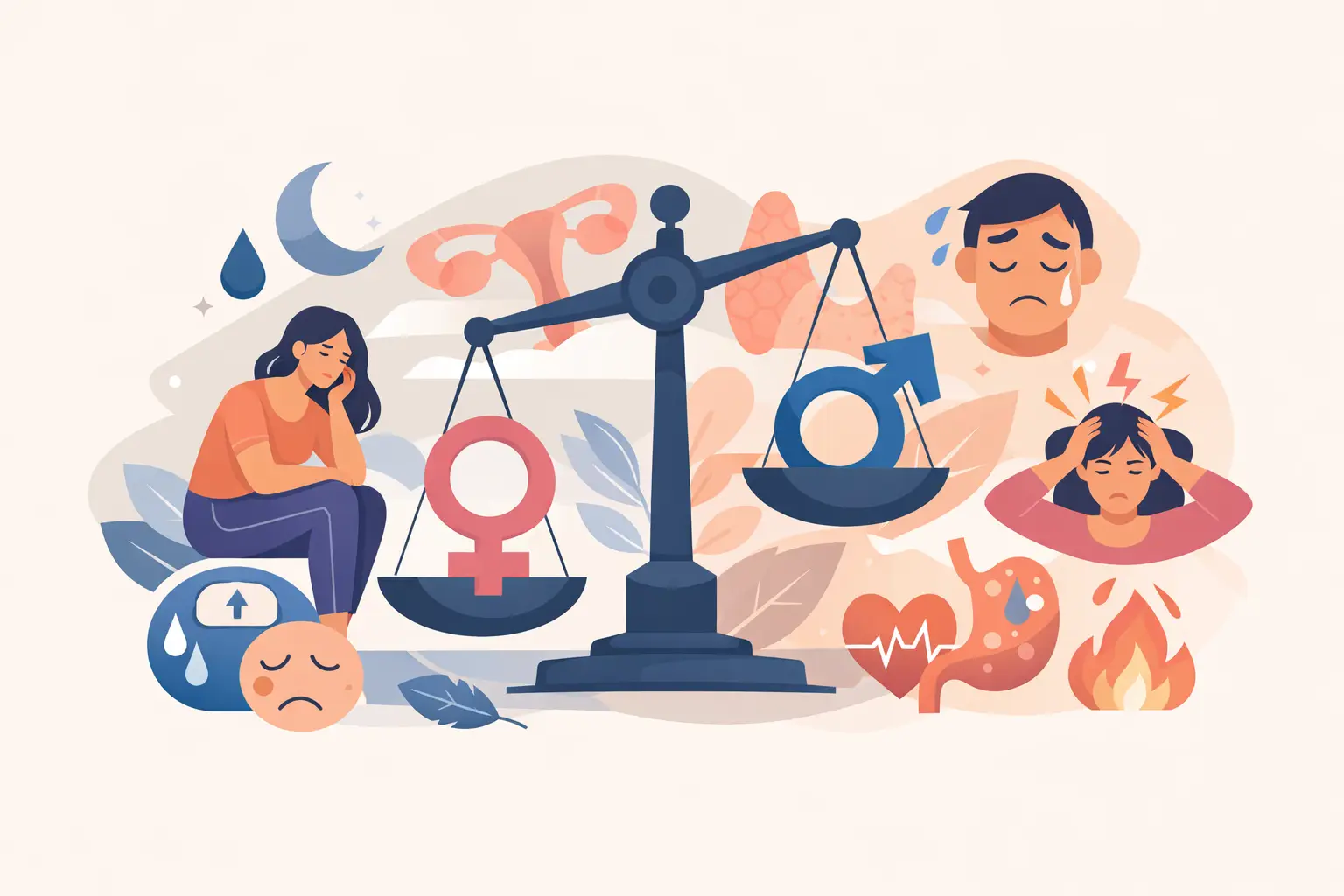
You may be sleeping enough, eating about the same, and trying to keep up with your routine – yet something still feels off. Many adults live with symptoms they brush aside for months, only to learn later that the real issue may be hormonal. Recognizing the signs of hormone imbalance early can help you get answers sooner and avoid feeling like you just have to push through.
Hormones act as the body’s chemical messengers. They help regulate energy, metabolism, mood, sleep, appetite, sexual health, and body temperature, among many other functions. When one or more hormones shift too high, too low, or out of proportion with others, the effects can show up in ways that seem unrelated at first.
What hormone imbalance can look like
Hormone changes are not always dramatic. In many cases, symptoms build gradually. You may notice subtle changes in your energy, your weight, your menstrual cycle, or how well you sleep. Because these concerns can overlap with stress, aging, or common medical conditions, it is easy to miss the bigger picture.
That is also why self-diagnosing can be misleading. A symptom like fatigue could be related to thyroid disease, menopause, low testosterone, poor sleep, anemia, diabetes, depression, medication effects, or several issues at once. Hormones matter, but context matters too.
Common signs of hormone imbalance
1. Ongoing fatigue
Feeling tired after a busy week is normal. Feeling drained day after day, even when you are getting reasonable rest, deserves more attention. Hormone-related fatigue can come with low motivation, poor concentration, and the sense that your usual energy never really returns.
Low thyroid hormone is one well-known cause, but it is not the only one. Changes in cortisol, insulin, estrogen, progesterone, and testosterone can also affect energy levels.
2. Unexplained weight gain or trouble losing weight
Weight can change for many reasons, including age, diet, activity level, medications, and chronic health conditions. Still, when weight gain seems to happen without a clear explanation, hormone imbalance is worth considering.
Thyroid problems can slow metabolism. Insulin resistance can make weight management more difficult. Menopause and low testosterone may also shift body composition, even if the number on the scale changes only modestly.
3. Mood changes, irritability, or anxiety
Hormones influence brain chemistry as well as reproductive health. If you have become more irritable, unusually emotional, anxious, or down without a clear cause, changing hormone levels may be part of the picture.
This can happen during perimenopause and menopause, with thyroid disorders, and sometimes with low testosterone. That said, mood symptoms should never be dismissed as just hormones. A careful medical evaluation helps sort out what is contributing and what support may help most.
4. Sleep problems
If you are having trouble falling asleep, waking frequently, or waking too early and not feeling rested, hormones may be involved. Night sweats and hot flashes are a common example, but they are not the only sleep-related clue.
Stress hormones, thyroid dysfunction, and changes in sex hormones can all disrupt normal sleep patterns. Poor sleep then makes other symptoms worse, including appetite changes, low mood, and fatigue.
5. Irregular periods or changes in menstrual flow
For women, menstrual changes are often one of the clearest signs of hormone imbalance. Periods may become heavier, lighter, farther apart, closer together, or more unpredictable than usual. Some women also notice worse cramping, spotting between periods, or more severe premenstrual symptoms.
These changes can occur with perimenopause, thyroid disorders, polycystic ovary syndrome, or other medical concerns. A cycle that suddenly changes is worth discussing with your provider, especially if it is persistent.
6. Hot flashes or feeling unusually cold
Temperature regulation depends in part on hormones. Hot flashes and night sweats are commonly linked with menopause and perimenopause, but feeling chilled all the time may point in a different direction, such as low thyroid hormone.
People often describe this symptom as being uncomfortable in a room where everyone else feels fine. When body temperature sensitivity changes along with fatigue, skin changes, or weight changes, it can offer an important clue.
7. Hair thinning or skin changes
Hormones can affect hair growth, skin oil production, and skin texture. Some people notice thinning hair, increased shedding, dry skin, acne, or skin that suddenly seems more fragile or irritated.
These symptoms may seem cosmetic, but they can reflect underlying shifts in thyroid function, androgen levels, estrogen levels, or insulin response. Changes in hair and skin are especially meaningful when they happen alongside other symptoms.
8. Low sex drive or sexual changes
A reduced interest in sex can have many causes, including stress, relationship concerns, poor sleep, depression, and medication side effects. It can also be related to hormones. Low testosterone, changing estrogen levels, and thyroid issues may all affect libido.
Some women also experience vaginal dryness or discomfort. Some men notice reduced sexual interest or changes in performance. These issues are common, but they are not something you simply have to accept without asking questions.
9. Brain fog or trouble focusing
Many patients describe hormone-related cognitive symptoms as feeling mentally slower than usual. You may have trouble concentrating, forget simple things, or feel less sharp during work or everyday tasks.
Brain fog is not specific to one diagnosis, which is why it should be evaluated rather than guessed at. Thyroid disorders, menopause-related changes, blood sugar problems, and poor sleep often overlap here.
10. Changes in muscle mass or strength
If you feel weaker than usual, recover more slowly, or notice a decline in muscle tone despite similar activity, hormones may be affecting how your body maintains lean mass. This can happen gradually with age, but sometimes the change feels faster than expected.
Low testosterone is one possible factor, and thyroid issues can also affect muscle function. In some cases, the concern is not just reduced strength but increased aches, lower stamina, or feeling physically depleted.
When symptoms should not be ignored
One symptom by itself does not always point to a hormone problem. A pattern matters more. If several of these symptoms are happening together, if they are interfering with daily life, or if they have been getting worse over time, it is reasonable to schedule an evaluation.
The key is not to wait until things become severe. Early assessment can identify whether hormones are involved or whether another condition is causing similar symptoms. Either way, you get clearer direction and a better path forward.
What causes signs of hormone imbalance?
There is no single answer. Hormone changes can happen with aging, menopause, thyroid disease, insulin resistance, obesity, diabetes, medication effects, chronic stress, poor sleep, and other medical conditions. Sometimes more than one factor is present at the same time.
That is why a thorough visit matters. Lab testing can be helpful, but it works best when combined with a full review of symptoms, medical history, current medications, and any ongoing health concerns. Good care looks at the whole person, not just one number on a lab report.
How a medical evaluation helps
If you are noticing signs of hormone imbalance, your provider will usually start by listening carefully to what has changed and how long it has been going on. From there, they may recommend a physical exam, targeted lab work, or additional testing based on your symptoms and health history.
Treatment depends on the cause. For some patients, improving sleep, addressing blood sugar, changing medications, or treating a thyroid condition resolves the issue. For others, hormone therapy may be appropriate as part of a personalized plan. The right approach depends on your symptoms, your medical background, and your goals.
At a primary care clinic like Ekom Medical, this kind of evaluation can often happen in the same place where you already manage routine exams, preventive care, and chronic conditions. That continuity matters because hormone symptoms do not happen in isolation from the rest of your health.
Signs of hormone imbalance in men and women
Some symptoms overlap, and some are more common in one group than another. Women often notice menstrual changes, hot flashes, night sweats, or vaginal dryness. Men may be more likely to report low libido, reduced muscle mass, or changes in energy and mood.
Still, there is plenty of overlap. Men can have thyroid disease and sleep disruption. Women can experience brain fog, weight changes, and fatigue related to several different hormonal issues. It helps to focus less on labels and more on the specific changes you are experiencing.
If your body feels different and you cannot fully explain why, trust that instinct. You do not need to have every symptom, and you do not need to know the cause before making an appointment. Sometimes the most helpful first step is simply having a provider take your concerns seriously and help connect the dots.

Comments are closed