

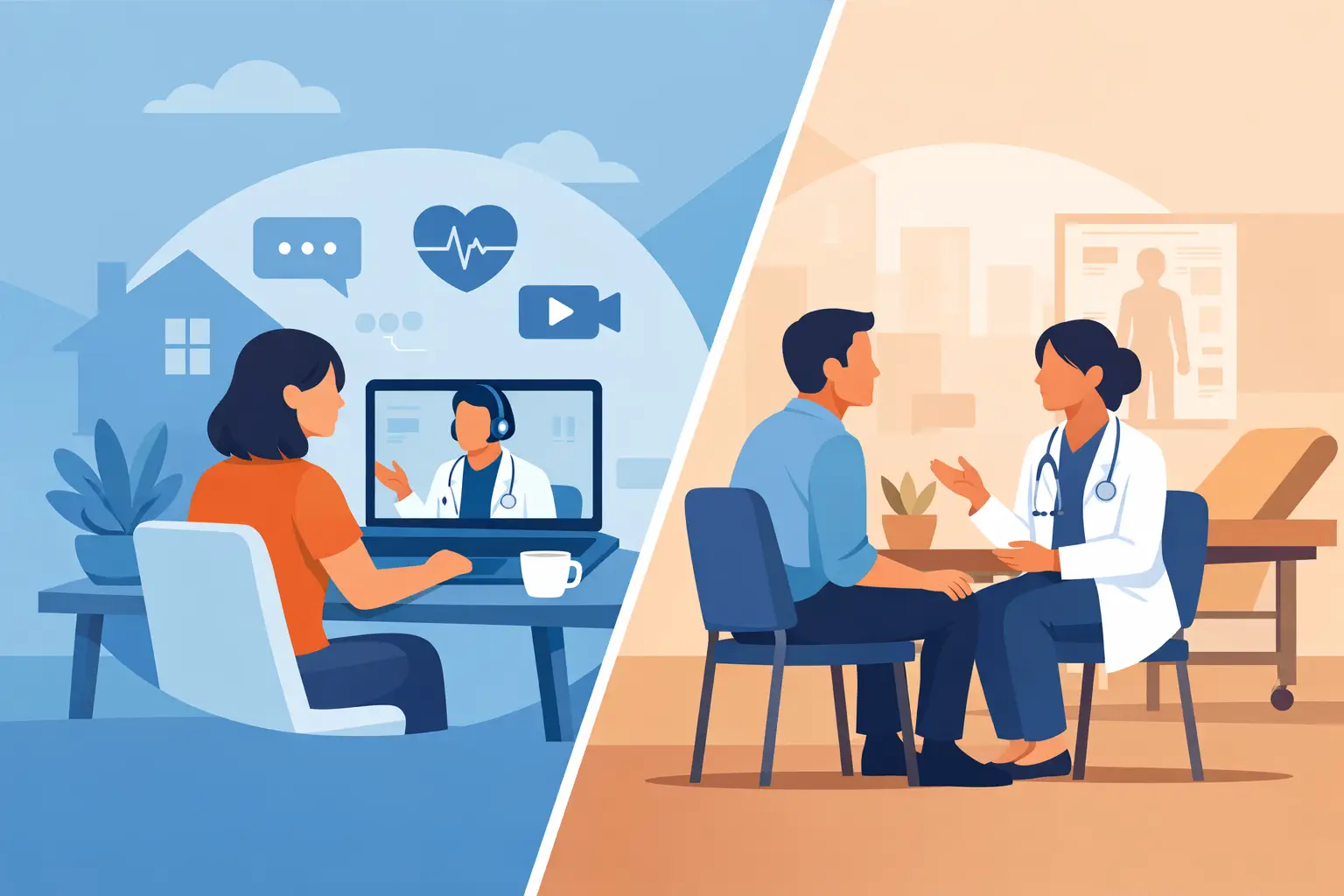
You wake up with a lingering cough, rising blood pressure readings, or a medication question that cannot wait another month. The first decision is often not just whether to book an appointment, but which kind. When patients compare telehealth vs office visit options, they are usually trying to solve for two things at once: getting the right care and fitting that care into real life.
That choice matters because convenience is only part of the equation. Some concerns can be handled very well through a virtual visit, while others truly need an in-person exam, testing, or a procedure. The best care is not about pushing every patient into one format. It is about matching the visit to the medical need.
Telehealth vs office visit: the real difference
A telehealth appointment allows you to meet with your provider remotely, usually by video or phone, from home or work. An office visit happens face to face in the clinic, where your provider can examine you directly, check vital signs, and perform testing or treatment on the spot.
Both can be valuable in primary care. The main difference is not quality of attention. A good provider can listen carefully, review symptoms, adjust medications, and guide next steps in either setting. The difference is what can be observed and done during the visit itself.
Telehealth tends to work best when the conversation is the main part of the care. Office visits tend to work best when your provider needs hands-on information.
When telehealth makes the most sense
Virtual care is often a strong option for follow-up care, routine check-ins, and problems that can be discussed clearly without a physical exam. If you already have an established diagnosis, a telehealth visit can be an efficient way to talk through symptoms, review home readings, and make a plan.
For many adults, telehealth works well for medication management, blood pressure follow-up when you monitor at home, diabetes check-ins when recent labs are available, thyroid medication review, minor upper respiratory symptoms, simple skin concerns that can be seen on video, and general questions about treatment plans. It can also be helpful when you are deciding whether a symptom needs urgent in-person evaluation.
There is also a practical benefit that patients appreciate right away. Telehealth can reduce travel time, time away from work, and the stress of arranging transportation or sitting in a waiting room when you already feel unwell. For older adults or patients managing multiple chronic conditions, that convenience can make it easier to stay consistent with care instead of delaying appointments.
That said, telehealth works best when the technology is reliable and the situation is straightforward enough to assess remotely. A blurry camera, poor connection, or missing home measurements can limit how much your provider can confidently evaluate.
Good examples of telehealth visits
If you need to discuss lab results, review blood sugar logs, talk about side effects from a medication, or check in on a chronic condition that is otherwise stable, telehealth is often appropriate. The same is true for many preventive conversations, such as discussing weight management goals, reviewing lifestyle changes, or deciding what type of in-person testing should be scheduled next.
For patients who value continuity with a trusted provider, telehealth can also make follow-up easier between office visits. That can strengthen long-term care rather than replace it.
When an office visit is the better choice
Some medical concerns need more than a conversation. If your provider needs to listen to your heart or lungs, examine your abdomen, look closely at a rash, check your oxygen level, test your urine, draw blood, perform an EKG, or complete a procedure, an office visit is the right setting.
In-person care is also important for annual physicals, new patient evaluations, vaccinations, and symptoms that may have several possible causes. Dizziness, chest discomfort, shortness of breath, swelling, unexplained weight changes, severe sore throat, persistent fever, and worsening symptoms usually deserve an office assessment. A hands-on exam often changes what your provider can detect and how quickly a diagnosis can be narrowed down.
This is especially relevant in internal medicine, where adults may have overlapping conditions such as hypertension, diabetes, kidney disease, or thyroid disorders. What sounds simple at first may need vital signs, testing, or a closer look to manage safely.
Why in-person visits still matter
Patients sometimes worry that choosing an office visit means they are making the harder, less efficient choice. In reality, it can be the more efficient choice when it avoids delays, repeat appointments, or missed findings. If your provider already suspects you will need testing or a physical exam, being in the clinic may save time and get you answers faster.
An office visit also creates space for more complete preventive care. Blood pressure checks, weight trends, screenings, immunizations, and diagnostic testing are all easier to keep on track when patients come in regularly.
Telehealth vs office visit for chronic condition management
For ongoing primary care, telehealth vs office visit is usually not an either-or decision. Most patients do best with a combination of both.
Take high blood pressure as an example. A telehealth follow-up can be very effective if you have a reliable home blood pressure cuff and a clear log of readings. But periodic office visits still matter to confirm measurements, assess for complications, and evaluate your overall cardiovascular health.
The same is true for diabetes. Virtual visits can be helpful for reviewing glucose patterns, discussing medications, and checking in between lab appointments. But foot exams, blood work, weight monitoring, and broader preventive care still need an in-person component.
For thyroid concerns, kidney disease monitoring, and obesity management, the pattern is similar. Telehealth can support consistency and communication. Office visits provide the examination, data, and testing that keep treatment accurate.
This blended approach often gives patients the best of both worlds. You get easier access when a quick follow-up is appropriate, without losing the depth of in-person care when your health situation calls for it.
How to decide which visit you need
A simple way to think about it is this: if the main need is conversation, planning, or follow-up, telehealth may be enough. If the main need is examination, testing, or treatment, an office visit is likely better.
It also helps to ask a few practical questions. Are your symptoms new or worsening? Do you think you may need lab work, imaging, or a procedure? Do you have home readings such as blood pressure, temperature, weight, or glucose values to share? Are you having symptoms that sound urgent or hard to describe over video?
If the answer points toward uncertainty, it is reasonable to call the clinic and ask which format makes the most sense. Good primary care is not just about scheduling quickly. It is about guiding you to the right level of care from the start.
The patient experience matters too
Medical appropriateness comes first, but comfort matters. Some patients feel more at ease talking from home, especially when discussing sensitive issues or ongoing health goals. Others prefer being in the room with their provider, where it feels easier to ask questions and feel fully assessed.
There is no wrong preference here. What matters is whether the format supports clear communication and safe medical decision-making. A compassionate primary care practice will recognize that patients have different needs, different schedules, and different levels of comfort with technology.
In a community practice setting, that flexibility can make a real difference. Patients in Glendale and nearby areas often balance work, caregiving, traffic, and chronic health needs all at once. Having both telehealth and office visit options available allows care to stay accessible without becoming one-size-fits-all.
The best choice is the one that fits the moment
The most useful question is not whether telehealth is better than an office visit, or the other way around. It is whether this specific concern can be managed safely and thoroughly in a virtual setting, or whether your provider needs to see you in person.
That answer may change from one visit to the next. A telehealth check-in this month might lead to an office visit next month for labs, an exam, or preventive care. That is not a sign that one method failed. It is simply how thoughtful primary care works.
The right medical home will help you make that choice with confidence, based on your symptoms, your history, and your long-term health goals. When care feels personalized, patients do not have to guess whether they are choosing convenience over quality. They can choose the visit type that helps them stay engaged, informed, and well cared for.

Comments are closed