

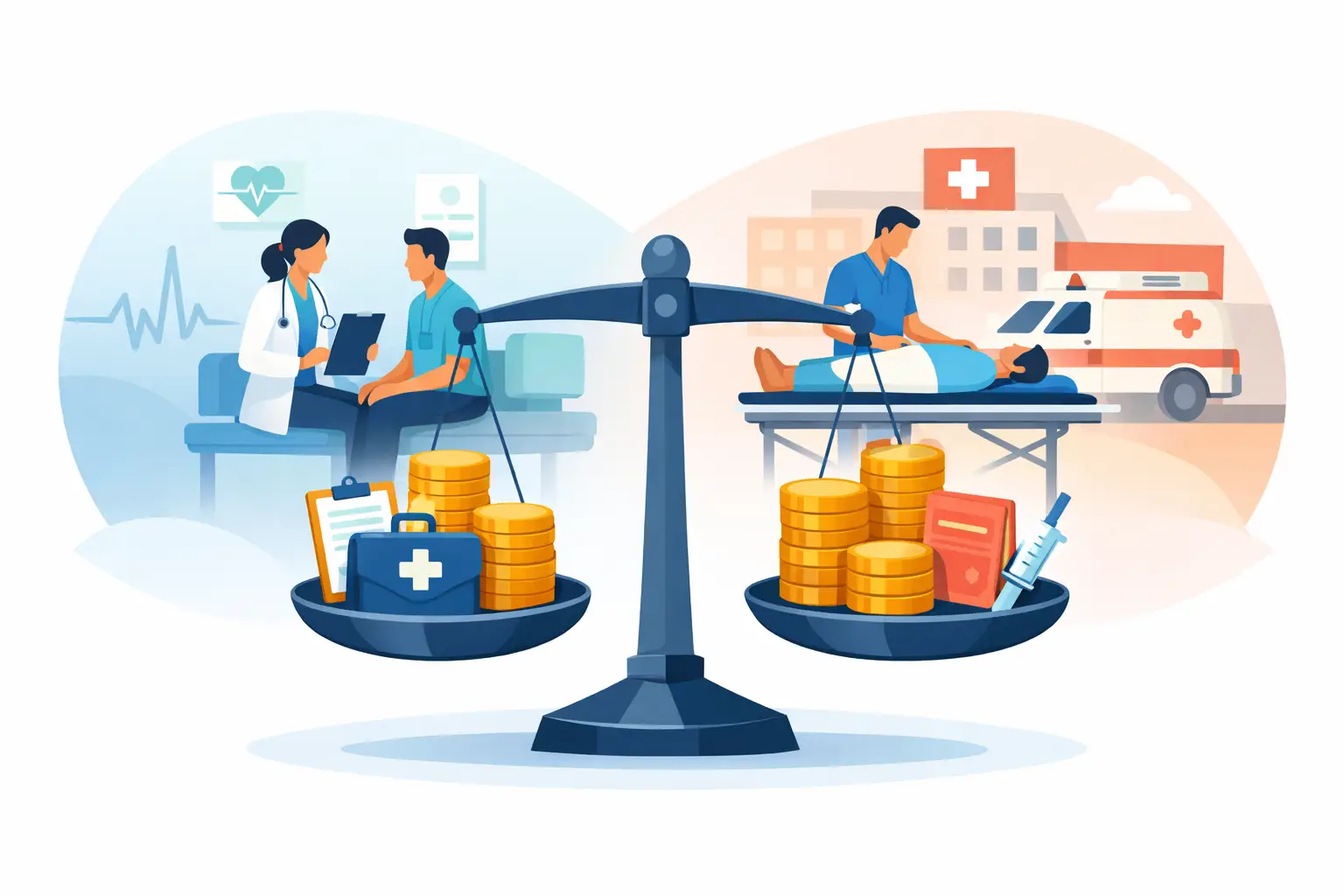
A sore throat on a Tuesday afternoon and chest pain at midnight should not be treated like the same problem. That is where many healthcare bills start to climb. When people compare primary care vs emergency room costs, the biggest difference is not just the price on the statement. It is whether the setting matched the medical need in the first place.
For many adults, especially those managing ongoing health concerns, knowing where to go can save money, time, and frustration. It can also lead to better follow-up care. A primary care clinic and an emergency room serve very different purposes, and choosing the right one often means getting more appropriate care from the start.
Primary care vs emergency room costs: why the gap is so wide
Primary care visits are usually far less expensive than emergency room visits because the services are built around routine and non-life-threatening care. A primary care office is designed to evaluate symptoms, manage chronic conditions, order appropriate testing, adjust medications, and follow patients over time. The overhead, staffing, and equipment needs are very different from a hospital emergency department.
An emergency room is built for urgent, potentially life-threatening situations. It operates 24 hours a day with specialized staff, advanced monitoring, imaging access, emergency medications, and hospital-level readiness. That level of readiness is necessary when someone is having severe breathing trouble, signs of a stroke, major bleeding, or other serious emergencies. It also comes at a much higher cost.
Even with insurance, the difference can be significant. A primary care copay may be relatively modest, while an emergency room visit can involve a higher copay, coinsurance, deductible exposure, and separate charges from the hospital, physician, imaging, or lab work. For uninsured patients, the price gap is often even larger.
What you are usually paying for in each setting
In primary care, the cost generally reflects an office visit, exam, medical decision-making, and any in-office services that may be appropriate, such as basic testing or routine procedures. The visit is focused on evaluating a specific concern within the context of your overall health history. That matters because a provider who knows your medications, prior lab results, and chronic conditions can often make decisions more efficiently.
In the emergency room, you are paying for immediate access to emergency resources. Even if your final diagnosis is something relatively minor, the facility still has to be ready for a heart attack, severe infection, trauma, or sudden neurologic symptoms. This is one reason emergency care can cost much more, even when the issue turns out not to be severe.
There is also a practical reality many patients do not expect: the ER often orders broader testing because the goal is to rule out dangerous causes quickly. That approach can be appropriate in emergencies, but it may lead to a much higher bill than a primary care evaluation for the same symptom would have generated.
When primary care is usually the better choice
Primary care is often the right place for common illnesses and routine concerns that need medical attention but are not dangerous emergencies. That includes cold and flu symptoms, sore throat, mild fever, sinus problems, ear pain, urinary symptoms, minor skin issues, digestive complaints without severe distress, medication refills, blood pressure follow-up, diabetes management, thyroid concerns, and preventive visits.
It is also the better setting for care that benefits from continuity. If you have hypertension, diabetes, kidney concerns, weight-related health issues, or hormonal changes, you usually need more than a one-time visit. You need someone who can track patterns, explain options clearly, order follow-up tests when needed, and adjust the plan over time. That kind of ongoing relationship is where primary care creates value beyond the immediate visit.
For patients in Glendale and nearby communities, having a dependable medical home can also reduce the tendency to use hospital care for issues that could have been handled earlier. A same-week office visit or telehealth check-in is often much less disruptive than an ER trip.
When the emergency room is worth the cost
There are times when the higher cost of emergency care is absolutely justified. If you have symptoms that could represent a life-threatening condition, the ER is the right place. Severe chest pain, sudden weakness on one side, confusion, major shortness of breath, uncontrolled bleeding, a serious injury, seizures, fainting with concerning symptoms, or signs of a severe allergic reaction should not wait for an office appointment.
This is where cost should not drive the decision. Delaying emergency care for a true emergency can lead to worse health outcomes and much larger medical costs later. The goal is not to avoid the ER at all costs. The goal is to use it for the situations it is built to handle.
That is the important trade-off. Primary care is more affordable for routine needs, but it is not a substitute for emergency treatment when something serious is happening.
Primary care vs emergency room costs with insurance
Insurance changes the out-of-pocket amount, but it does not erase the pattern. In many plans, primary care visits have lower copays and may even be fully covered for certain preventive services. Emergency room visits often come with a much higher copay, plus deductible and coinsurance responsibilities.
Some patients assume that if they have insurance, cost differences are minor. In reality, the ER is one of the places where patients are most likely to be surprised by a large bill. Depending on the plan, you may also face separate charges for imaging, lab tests, or physician services. If your issue could have been safely handled in primary care, that difference may feel especially frustrating afterward.
It is worth checking your plan details before you need care. Understanding your primary care benefits, telehealth access, urgent care options, and emergency room coverage can help you make calmer decisions when you are not feeling your best.
The hidden cost of using the wrong setting
Price is only part of the equation. There is also the cost of lost time, fragmented care, and missed follow-up.
A primary care provider can treat today’s concern while also noticing the bigger picture. Maybe recurrent fatigue connects to a thyroid issue. Maybe frequent urination points to uncontrolled blood sugar. Maybe repeated headaches deserve a more thoughtful review of blood pressure, sleep, hydration, and medication use. In a busy emergency setting, the focus is often narrower by necessity: identify immediate danger, stabilize if needed, and discharge or admit.
That is not a flaw in emergency medicine. It is simply a different mission. But for patients with recurring symptoms or chronic conditions, disconnected care can lead to repeat visits, duplicate testing, and ongoing uncertainty. Over time, that can cost more than building a consistent relationship with a primary care clinic.
How to decide where to go
A simple question can help: Is this potentially life-threatening, or does it need timely but non-emergency medical attention?
If you are dealing with severe symptoms, rapid worsening, or anything that feels dangerous, seek emergency care. If the problem is uncomfortable, concerning, or needs evaluation but does not appear life-threatening, primary care is often the more cost-effective and appropriate starting point.
It also helps to think beyond the current symptom. If you may need follow-up testing, medication adjustments, preventive guidance, or long-term management, primary care offers continuity that the ER does not. That ongoing support often improves both health outcomes and cost control.
Practices like Ekom Medical are built around that long-term approach. Instead of treating each issue as an isolated event, primary care connects routine visits, chronic disease management, diagnostic evaluation, and patient education into one care relationship.
A smarter healthcare habit for the long run
Most people do not choose the emergency room because they want a higher bill. They go because they are worried, uncomfortable, unsure, or unable to get care elsewhere quickly enough. That is understandable. Still, one of the most practical ways to lower healthcare spending is to establish care with a primary care provider before an urgent question comes up.
When you already know where to call, how to schedule, and who understands your health history, it becomes much easier to make the right choice under stress. That means fewer unnecessary ER visits, fewer surprise bills, and a better chance of getting care that fits the problem.
The best next step is often a simple one: build a relationship with a primary care clinic now, so when something comes up later, you are not making an expensive decision in the dark.

Comments are closed